
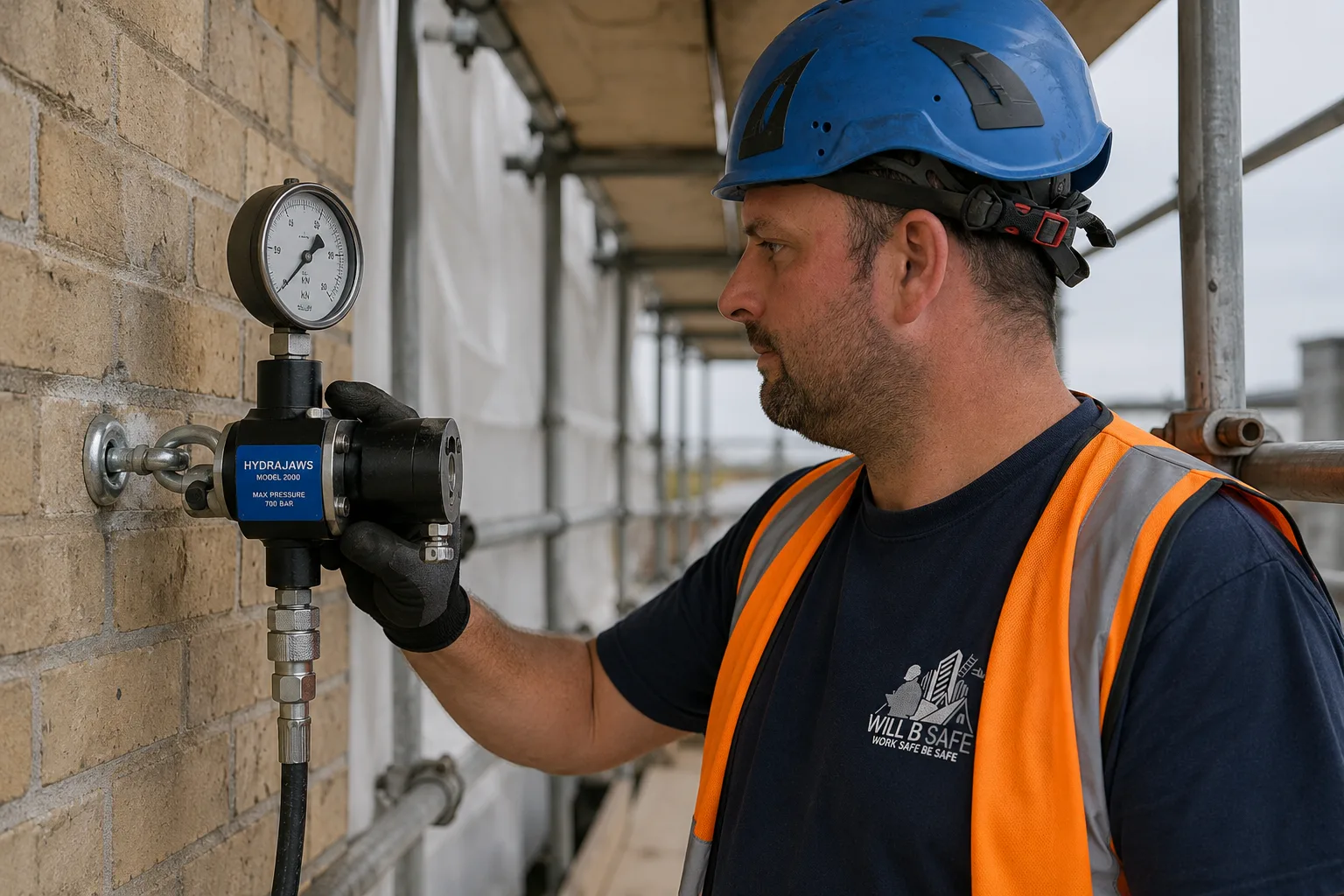
Scaffold anchor installation and testing
Scaffold Anchor Installation and Testing
Installation and pull-testing of scaffold tie anchors, with certified results your principal contractor will accept.
Scaffold anchors need two kinds of test. Preliminary tests establish what load an anchor type can safely take in a particular base material; proof tests then confirm that the installed anchors were fitted correctly, on a proportion of anchors on every job. I install and test anchors to BS 8539 and NASC TG4:25 across Surrey, London and the South East, with certified results you can hand straight to the principal contractor. Dedicated county guides cover scaffold inspections in Surrey and scaffold inspections in London. The inspection cycle this testing sits alongside is covered in how often scaffolding needs to be inspected.
What's included
See what you receive for an example of the paperwork behind it.
The four substrate questions
Dense engineering brick, soft stock brick, aircrete and hollow block behave nothing like each other, and the manufacturer's figure assumes a base material that may not be yours. Before any anchor goes in I want to know what the wall is made of, whether it is solid or cavity, what condition it is in, and whether anything behind the face will reduce the holding power. When the drawing does not say, only the test does.
Who it's for
Scaffolding contractors installing ties and needing a defensible test record.
Principal contractors deciding what anchor evidence to demand from subcontractors.
Anyone whose paperwork still cites TG4:19, which was replaced by TG4:25 in 2025.
Standards
BS 8539, the code of practice for the selection and installation of post-installed anchors in concrete and masonry, and NASC TG4:25, Anchorage Systems for Scaffolding, which sets the testing proportions and loads.
Qualified and accredited
Inspections are carried out to the Work at Height Regulations 2005 (Schedule 7), working to TG20:21 and SG4:22. Anchor testing is carried out to BS 8539 and NASC TG4:25.
Frequently asked questions

Book Anchor Testing
Call me on 07737 041470 or send the site details. I'll come back to you within 24 hours on weekdays, or the next working day at weekends. If it's urgent, call rather than email.