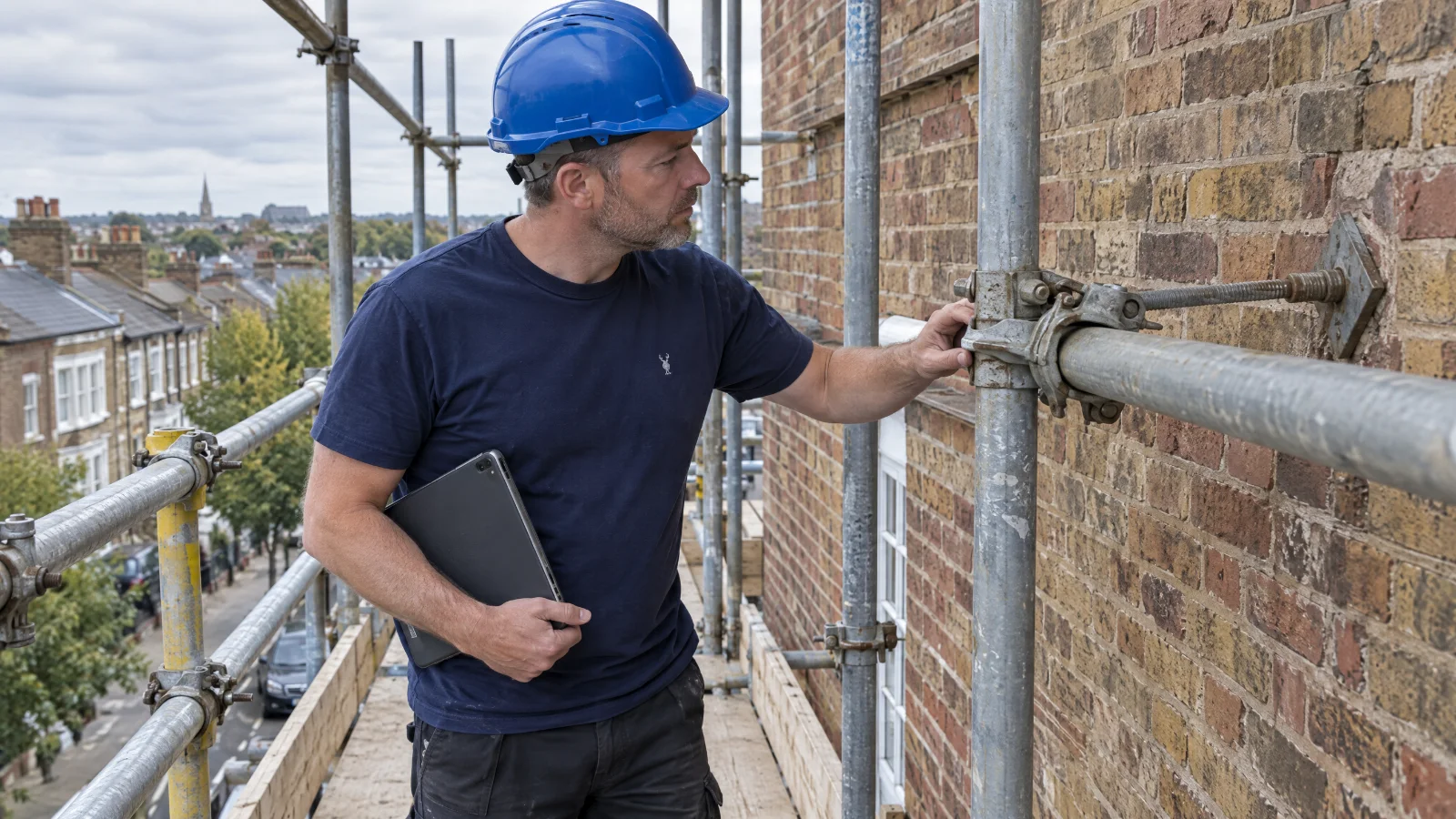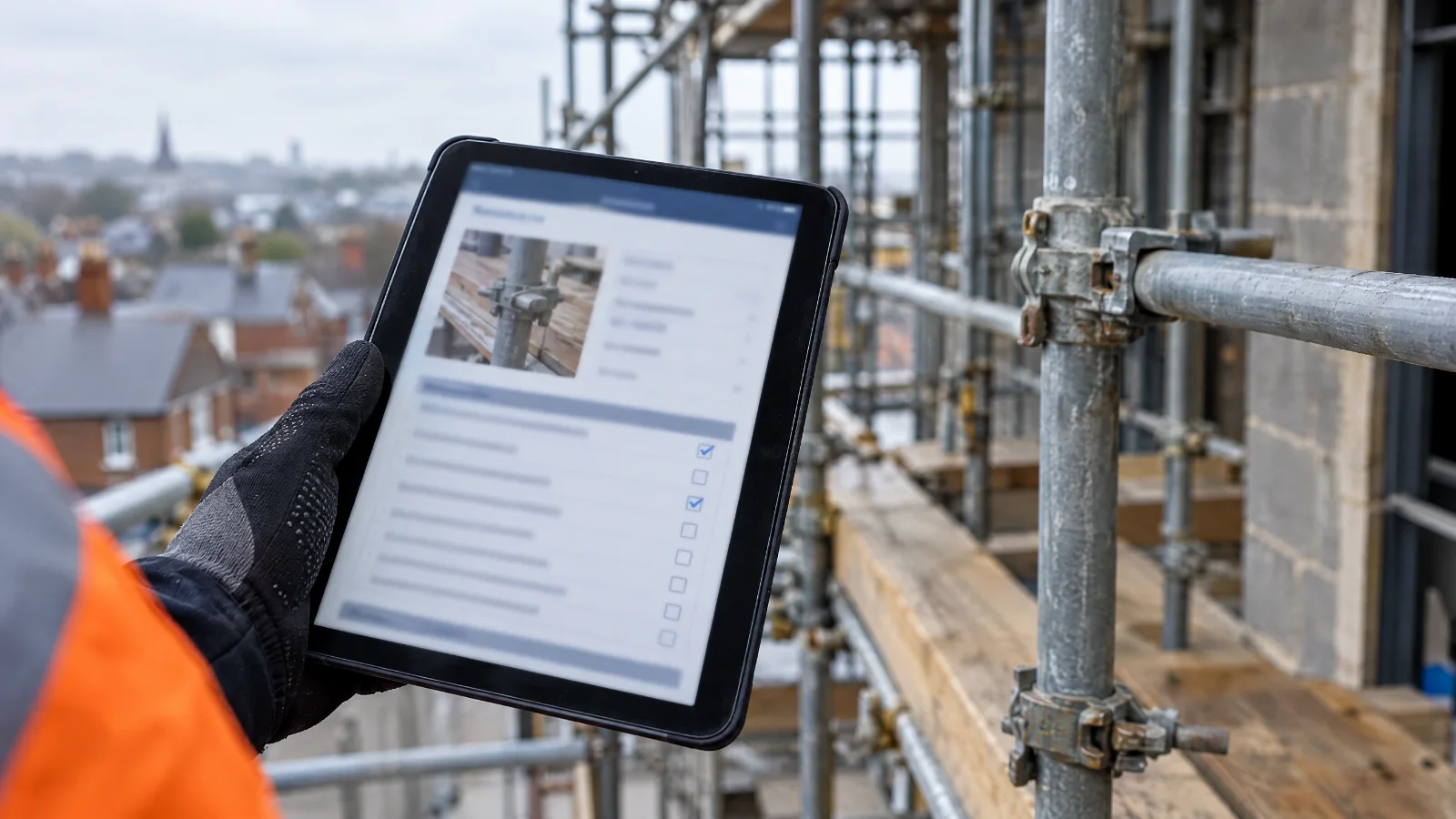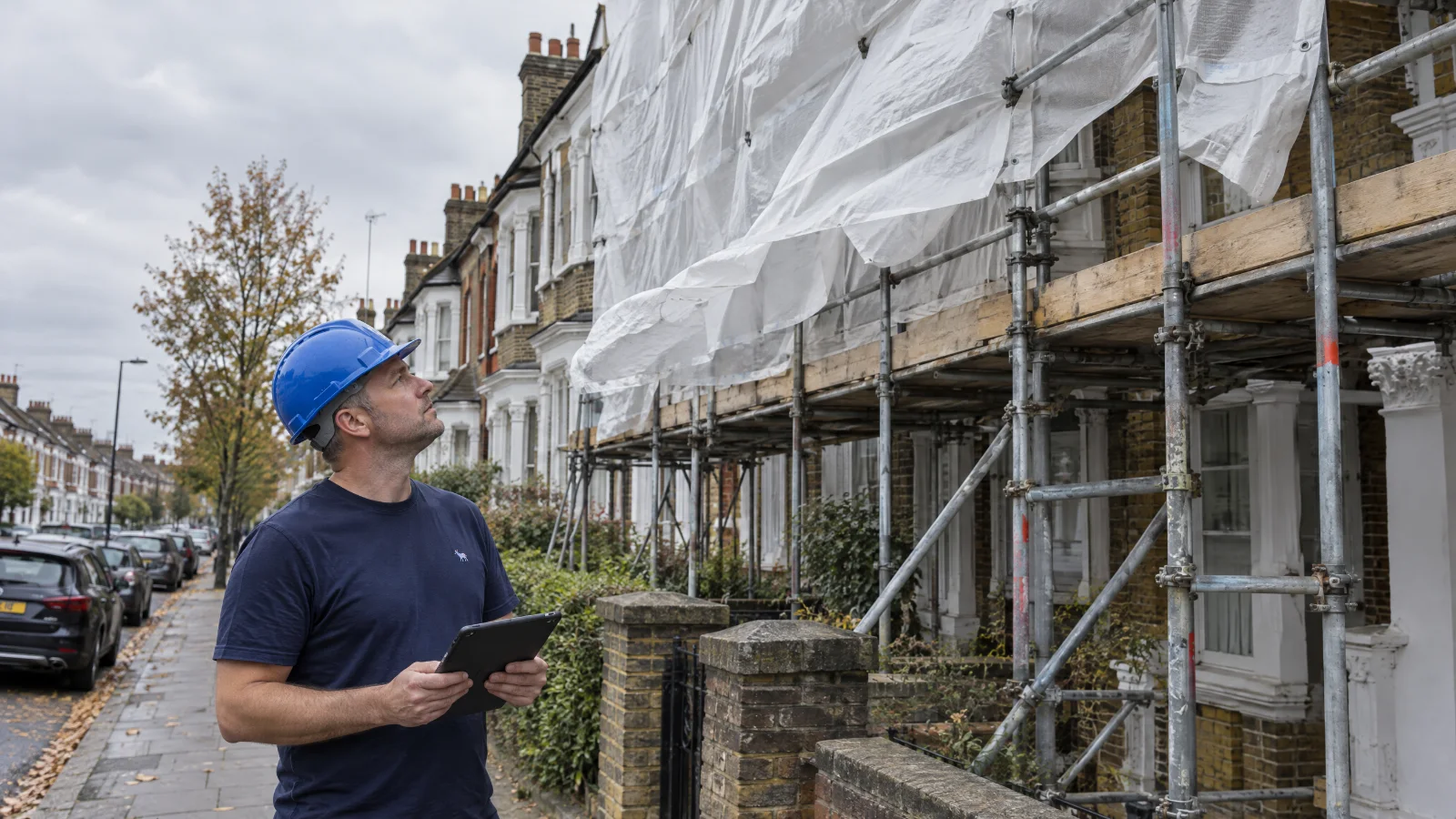
Can a health and safety consultant inspect scaffolding? Where the competence line actually falls
CISRS Advanced Scaffolder with Advanced Scaffold Inspection, Temporary Works Coordinator | Reviewed October 2026

Quick answer
Sometimes. The HSE's guidance says a non-scaffolder who has attended a scaffold inspection course could be deemed competent to inspect a basic scaffold structure, but that complex structures usually need an Advanced Scaffolder or someone trained on that specific system. A NEBOSH or IOSH qualification on its own does not make anyone competent to inspect scaffolding. The line is the scaffold, not the consultant.
If you run a health and safety consultancy with construction clients, this has probably come up. A client with a scaffold going up asks whether you can add the weekly inspections to what you already do for them. You do their audits, their RAMS, their inductions. Why not the scaffold?
I have had this conversation with consultancies on both sides of the decision, and I want to set out where the line sits, because getting it wrong is one of the few things in this trade that can put a consultant's own name on a prosecution. The arrangement that solves it is at the end, and it is the basis of my independent scaffold inspections for consultancies.
Part of our scaffold safety guide.
What does "competent" mean for scaffold inspection specifically?
The Work at Height Regulations 2005 do not define it beyond requiring inspection by a competent person. The HSE's scaffolding guidance fills the gap, and the wording is worth reading closely:
"All scaffolding inspection must be carried out by a competent person whose combination of knowledge, training and experience is appropriate for the type and complexity of the scaffold."
Then the two sentences that decide the question for a consultant:
"A non-scaffolder who has attended a scaffold inspection course, eg a site manager, could be deemed competent to inspect a basic scaffold structure."
"For complex structures this would usually be an 'Advanced Scaffolder' or an individual who has received training in a specific type of system scaffold for the complexity of the configuration involved."
The industry's own scheme is built the same way. CISRS runs a three-day Basic Scaffold Inspection course for statutory inspections of basic scaffold structures, and a two-day Advanced Scaffold Inspection course covering basic and more complex structures, which requires two years holding the Basic card, two years as a CISRS Scaffolder, or an Advanced Scaffolder card before you can sit it. The scheme separates the two levels because the scaffolds are different.
So the test is not "am I a competent health and safety professional?" It is "am I competent for this scaffold?" I go into the general version of that question in what is a competent person for scaffold inspection.
Basic or complex: the question to ask before you say yes
| The scaffold in front of you | Basic or complex? | Who HSE and CISRS point to |
|---|---|---|
| Independent tied scaffold built to a TG20:21 compliance sheet, no design, no loading bays, no special features | Basic | A person who has completed a scaffold inspection course, including a non-scaffolder such as a site manager |
| Anything with a bespoke design: cantilevers, bridging, loading bays, birdcages, temporary roofs, sheeting or netting beyond the TG20 envelope | Complex | An Advanced Scaffolder, or an Advanced Scaffold Inspection cardholder |
| System scaffold | Depends on configuration | Someone trained on that specific system for that complexity |
| A basic scaffold that has been altered since erection | Treat as complex until checked | Advanced-level competence, because the alteration is where the risk usually sits |
The word "basic" does more work than people realise. HSE's guidance says that unless a scaffold is assembled to a generally recognised standard configuration, such as NASC TG20 for tube and fitting scaffolds, it must be designed by bespoke calculation by a competent person. The moment there is a design, you are in the complex column, and a short inspection course for non-scaffolders is not the competence HSE describes.
The misconception to clear up: a NEBOSH General or Construction Certificate, or IOSH membership, is evidence of general health and safety competence. Neither is scaffold inspection training, and neither is what HSE means by "a scaffold inspection course". I hold a NEBOSH certificate myself. It is not what makes me competent to inspect a scaffold; twenty years on the tools and a CISRS Advanced Scaffold Inspection endorsement are. A consultant can be excellent at the job and still not be the competent person for the scaffold.
What goes wrong when a consultant signs off a scaffold they should not
Three things, in rising order of seriousness.
The report does not hold up. Schedule 7 requires details of any matter that could give rise to a risk, any action taken and any further action needed. An inspector who is not competent for the structure tends to record what they can see rather than what matters: boards and guardrails, not ties, bracing and foundations. The report looks complete and misses the thing that fails. What a report has to contain is in my scaffold inspection report checklist.
The client's monitoring file has a hole in it. Under CDM 2015 regulation 13(1) the principal contractor has to plan, manage and monitor the construction phase, and in practice that means being able to show the scaffold was inspected by someone competent. If that someone's competence is a NEBOSH certificate, the file does not do its job, and it is your client who carries the regulation 13(1) exposure.
Your name is on the report. Schedule 7 item 8 is the name and position of the person making the report. If a scaffold fails and the inspector was not competent for its type, the investigation starts with that name, and a consultancy's reputation with every other client on its books is tied to it.
How to keep the client and sub out the inspection
This is the model that works, and it is the one I offer consultancies.
- You keep the relationship. The client still deals with you for everything. You are the one who tells them the scaffold needs a specialist inspector, which reads as competence, not weakness.
- The inspector works the cycle on your behalf. Weekly under regulation 12, plus the unscheduled inspections after alteration or weather, with the Schedule 7 report issued within 24 hours to you and to the client, in the inspector's own name with their CISRS number on it. The full cycle is set out in how often scaffolding needs to be inspected.
- Your file gets the evidence it needs. A copy of the inspector's card, their insurance schedule, and every report. That is the regulation 8(3) and 13(1) evidence your client needs, and you can hand it over complete.
- You bill it how you choose. Some consultancies pass the inspection through at cost, some mark it up, some wrap it into a monthly compliance fee. The client sees one supplier either way.
What the consultancy gains is a service line it could not offer safely, a client that did not go elsewhere to find it, and a report it does not have to defend.
What to check before you appoint a scaffold inspector
You are doing the appointing, so CDM 2015 regulation 8(3) puts the reasonable steps on you. The checks take ten minutes:
- The card. CISRS Advanced Scaffold Inspection, or Advanced Scaffolder with the inspection endorsement, and a number you have checked rather than a photo you have glanced at.
- The experience behind it. A card records a course. Ask how long they have been on scaffolds and what types they inspect.
- Insurance. Employers' liability, public liability and professional indemnity, with limits that satisfy your client's supply chain requirements.
- Turnaround. Reports within 24 hours is the regulation, not a nice-to-have. Ask to see a recent one.
- Independence. Not employed by the scaffolding contractor whose work they are inspecting.
Key takeaways
- HSE's line is the scaffold, not the person: a general health and safety professional with a scaffold inspection course may be competent for a basic scaffold, and usually is not for a complex one.
- Anything with a bespoke design is complex. TG20-compliant with no design is basic. An altered scaffold should be treated as complex until checked.
- NEBOSH and IOSH are not scaffold inspection training. CISRS runs separate Basic and Advanced Scaffold Inspection courses for a reason.
- Subletting inspection to a CISRS Advanced inspector keeps the client, closes the competence gap, and puts the inspector's name on the report rather than yours.
- Check the card number, the experience, the insurance and the turnaround before you appoint. Regulation 8(3) puts that on you.
Can a NEBOSH qualified consultant legally inspect scaffolding?
There is no rule saying they cannot, and for a basic TG20-compliant scaffold a consultant who has completed a recognised scaffold inspection course may be deemed competent. For a designed or complex scaffold, HSE guidance points to Advanced Scaffolder level competence, which NEBOSH does not provide.
What is the difference between CISRS Basic and Advanced Scaffold Inspection?
Basic Scaffold Inspection is a three-day course for statutory inspections of basic scaffold structures. Advanced Scaffold Inspection is a two-day course covering basic and more complex structures, and requires two years holding the Basic card, two years as a CISRS Scaffolder, or an Advanced Scaffolder card first.
If I sub out the inspection, whose name goes on the report?
The inspector's. Schedule 7 requires the name and position of the person making the report, so the competent person who carried out the inspection signs it. Your consultancy keeps the client relationship and receives the report, but the inspection record stands in the inspector's own name.
Does subletting the inspection change my client's CDM duties?
No. The principal contractor still holds the regulation 13(1) duty to plan, manage and monitor, and whoever appoints the inspector holds the regulation 8(3) duty to check competence. What changes is that the file now contains a checked CISRS card and a report from a competent person, which is what both duties need.
Need a scaffold inspector your clients can rely on?
I inspect scaffolds on behalf of health and safety consultancies across Surrey, London and the South East. You keep the client, I work the seven-day cycle, and every Schedule 7 report lands within 24 hours with my name and CISRS number on it. If a client has asked you to cover their scaffold, let's talk about how the arrangement works, or see the wider health and safety support I offer alongside it.
Speak to Jamie or call +44 7737 041470.
Jamie Will is the founder of Will B Safe, an independent scaffold safety consultancy working with scaffolding companies, contractors and councils across London and the South East. A CISRS Advanced Scaffolder with the Advanced Scaffold Inspection endorsement and a CITB Temporary Works Coordinator, he has spent over 20 years in the scaffolding industry and writes from the scaffolds he inspects and tests every week, not from theory.