In-house vs independent scaffold inspection: which is right for your sites?
CISRS Advanced Scaffolder with Advanced Scaffold Inspection, Temporary Works Coordinator | Reviewed November 2026
Quick answer
In-house scaffold inspection is legal and works when three conditions hold: the inspector is competent for your most complex scaffold, the seven-day cycle never slips for the erecting programme, and nobody you answer to wants independent records. If any one fails, independent inspection is the better choice, mainly because of what the record is worth after an incident.
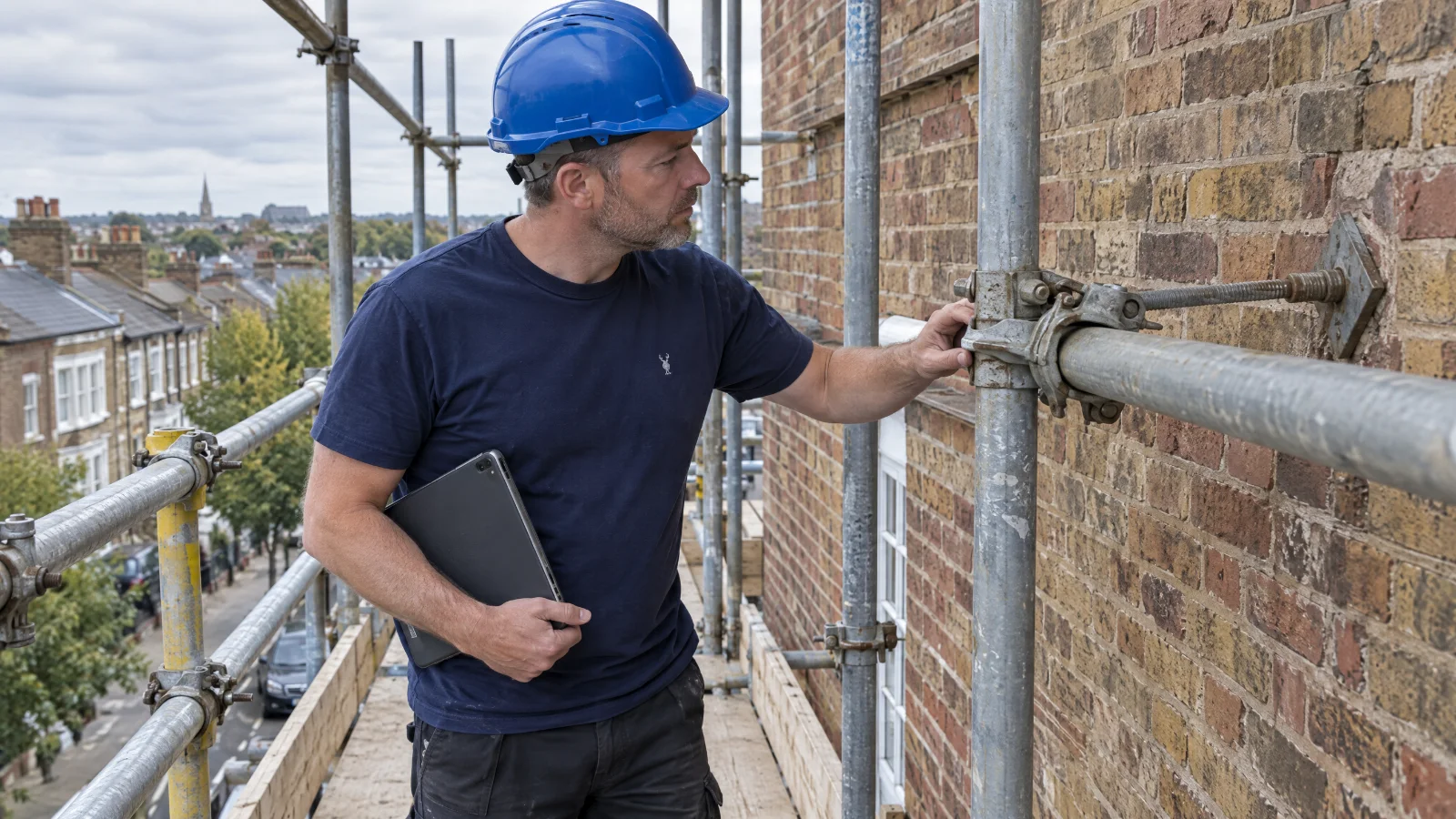
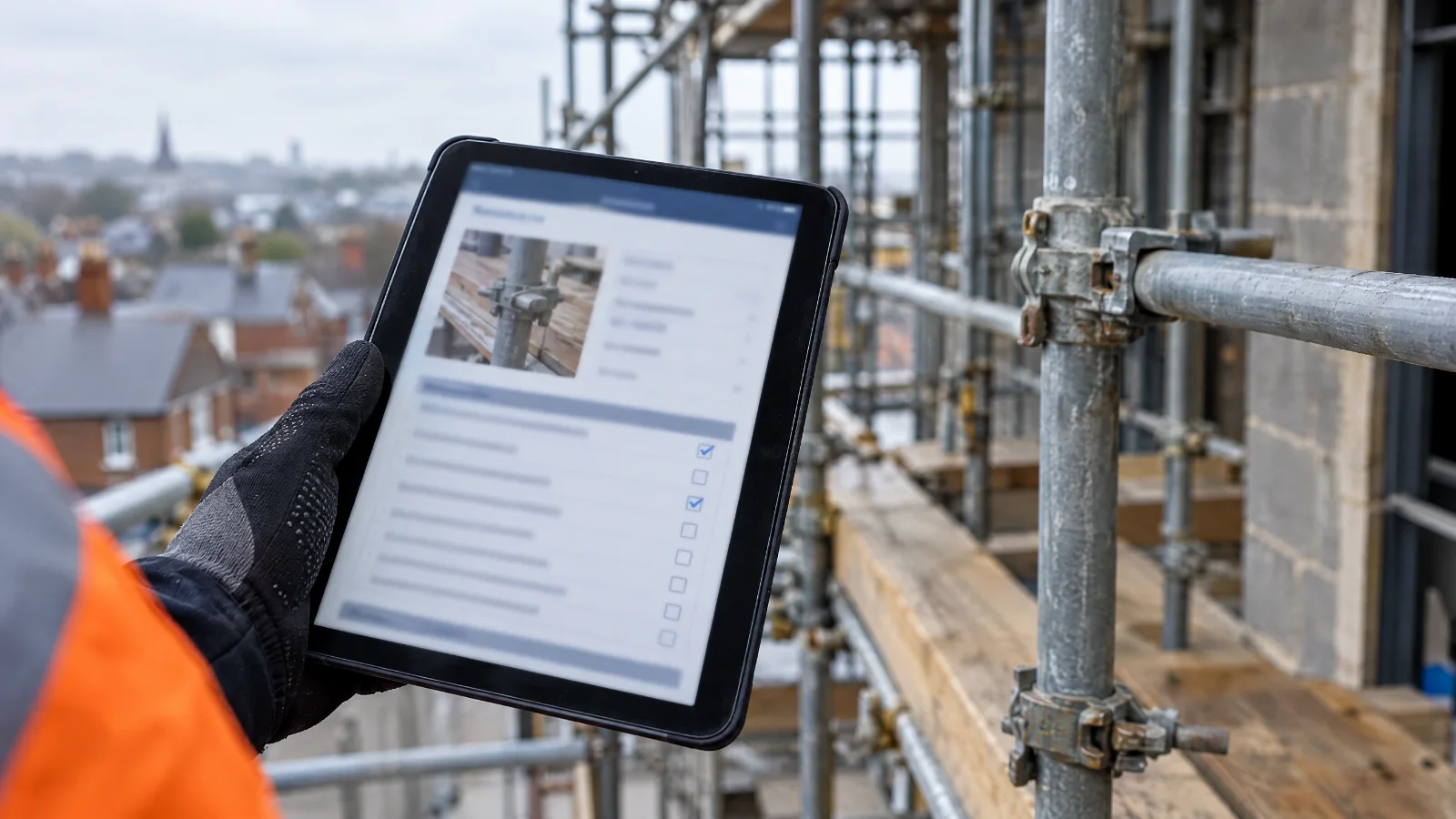
Every scaffold on a construction site has to be inspected by a competent person before first use, after anything likely to have affected its stability, and at least every seven days. The law is clear about that. It says nothing about who that competent person should work for.
So the choice is yours, and on most sites it comes down to three options: the scaffolding contractor inspects its own scaffold, someone on the principal contractor's team does it, or you bring in an independent inspector. I am an independent inspector, so you know where my commercial interest sits. I have tried to write this so that you could reach the opposite conclusion from it, and some readers should. If you want to see what an independent arrangement looks like first, it is on my scaffold inspections page.
Part of our scaffold safety guide.
What does the law require, whoever does the inspecting?
The same thing in all three cases. Regulation 12(4) of the Work at Height Regulations 2005 says that a working platform "used for construction work" and "from which a person could fall 2 metres or more" must not be "used in any position unless it has been inspected in that position or, in the case of a mobile working platform, inspected on the site, within the previous 7 days."
Regulation 12(10) defines an inspection as "such visual or more rigorous inspection by a competent person as is appropriate for safety purposes". Regulation 12(7) then requires the inspector to prepare a report containing the Schedule 7 particulars before the end of the working period, and to provide it within 24 hours "to the person on whose behalf the inspection was carried out."
None of that changes with the inspector's employer. An in-house report and an independent report have to meet exactly the same legal standard. What differs is everything around the report: who is competent for which scaffold, whether the seven-day cycle holds when the programme is under pressure, and how much the record is worth on a bad day.
The HSE is also clear about where the duty to make sure it happens sits. Its scaffolding guidance says: "It is the scaffold users/hirers responsibility to ensure that all scaffolding has been inspected". If you are the principal contractor or the trade using the scaffold, you can hand the inspection to someone else. The responsibility for making sure it happened stays with you. Who that leaves holding the duty on a typical site is covered in who is responsible for scaffold inspections on site.
How do in-house, site team and independent inspection compare?
Here is the comparison as straight as I can make it.
| Scaffolding contractor inspects its own scaffold | Principal contractor's own trained person | Independent inspector | |
|---|---|---|---|
| Legal? | Yes, if competent for that scaffold | Yes, if competent for that scaffold | Yes, if competent for that scaffold |
| Competence | Often strong: scaffolders who know the structure | HSE: a non-scaffolder with an inspection course "could be deemed competent to inspect a basic scaffold structure" | Should cover basic and complex; check it with the Five Competence Questions |
| How you pay for it | Inside the hire or contract price | Site manager's time, plus training | A separate fee per visit or per round |
| Seven-day cycle in a busy week | Competes with erecting work for the same people | Competes with running the site | The inspection is the job, so nothing competes with it |
| Conflict of interest | Inspecting the firm's own work | Inspecting a scaffold the programme needs open | No stake in the scaffold or the programme |
| Weight of the record after an incident | Lowest: written by the firm whose work is in question | Middle: written by a party with a programme to protect | Highest: written by someone with no stake in the answer |
Read the table honestly and the scaffolding contractor comes out well on knowledge. Its own inspectors often know the structure better than anyone, and a well-run in-house system beats a poorly run independent one every time. Where in-house inspection falls short, it is on time and on weight, and very rarely on skill.
When is in-house scaffold inspection the right answer?
When all three of these conditions hold. I call it the Three-Condition Test, and it is the verdict I would give anyone who asked me straight, even though it sometimes points away from my own services.
1. The inspector is competent for your most complex scaffold, and is not checking their own work. Competence is judged against the scaffold, so your most complex structure sets the bar, not your average one. A site manager with an inspection course may be competent for an independent tied scaffold on a terrace and out of their depth on a designed scaffold with a loading bay. On the scaffolding contractor's side, the minimum I would set is that the inspector was not in the gang that erected or last altered that scaffold.
2. The seven-day cycle survives your busiest week. Look at the inspection dates on one long-running scaffold across a period when the firm was flat out. If the gaps stretch past seven days whenever erecting work peaks, the arrangement has already failed this condition, however competent the inspector. The interval runs from the last inspection, as I set out in how often scaffolding needs to be inspected, and a busy week does not pause it.
3. Nobody you answer to is asking for independent records. Principal contractors, clients, housing providers and insurers often ask who carried out the inspection as well as whether it happened. If someone upstream already wants independent records, the decision has been made for you. What to do when that request lands is in a main contractor has asked for independent scaffold inspection records.
If all three hold, keep it in house. You have a legal, working system, and paying for independence would mean paying for something you already have. If any one fails, independent inspection is the better choice for that site.
What is the factor nobody prices in?
What the record is worth after an incident.
Most comparisons of in-house and independent inspection come down to cost per visit. On an ordinary week that is a fair comparison, because every compliant report does the same job: it records that a competent person looked at the scaffold and either found it safe or listed what needed doing.
The difference shows on the day something goes wrong. After a fall, a collapse or a near miss, inspection records stop being routine paperwork and become evidence. The principal contractor will read them. An insurer deciding whether to defend a claim will read them. If the HSE investigates, an inspector will read them. Each of them will ask the same question about every report in the file: who wrote this, and did they have any reason to write it this way?
An in-house report can be complete, accurate and signed by a fully competent inspector, and it still invites that question, because its author works for a firm whose own work, programme or contract is under scrutiny. An independent report answers the question before anyone asks it. The inspection itself may have been identical. The record is simply harder to doubt.
The HSE's guidance makes this sharper. It says the report "must note any defects or matters that could give rise to a risk to health and safety and any corrective actions taken, even when those actions are taken promptly, as this assists with the identification of any recurring problem." A defect found and fixed on the same visit still belongs in the report. That asks more of an inspector whose colleagues created the defect, because every entry is a note against their own firm. A long run of clean in-house reports proves nothing wrong, but it is the part of the file an investigator is most likely to look at closely.
You cannot add that weight after the event. Whatever arrangement was in place on the day is the one whose records get read, so the time to decide what your records are worth is before anyone needs them.
Can you combine in-house and independent inspection?
Yes, and on larger or longer jobs it is often the most sensible arrangement. Three combinations work well:
- Independent weekly, in-house cover in between. The independent inspector holds the seven-day cycle. The site's own competent person covers the unscheduled triggers between visits, such as an alteration on a Wednesday or a storm on a Friday night, and writes those reports.
- In-house weekly, independent audit. The scaffolding contractor or site team keeps the routine inspections, and an independent inspector reviews the scaffolds and the paperwork at intervals. It tests condition 2 and gives you a second opinion without replacing the system. My scaffold inspections and audits page covers both arrangements.
- Split by complexity. A trained site manager inspects the basic scaffolds HSE guidance says they can be competent for, and the designed or complex structures go to someone competent for that complexity.
Whichever combination you use, every report still needs the same Schedule 7 particulars. If you are unsure whether yours have them, run your last four against the scaffold inspection report checklist.
When is independent inspection not worth paying for?
Be honest about scale. If you run one or two short, simple scaffolds a year, have a site manager trained and competent for basic structures, and nobody upstream wants independent records, the Three-Condition Test says keep it in house, and I agree with it.
And no inspection arrangement replaces the people using the scaffold looking at it before they climb on. The HSE's guidance says a scaffold should be "checked whenever it is substantially altered or adversely affected, eg by high winds". A weekly inspector is one visit in seven days. The site is there every day.
How do you decide for your own sites this week?
Take one live scaffold and answer three questions in writing:
- Which is the most complex scaffold on this site, and is the person inspecting it competent for that complexity?
- Over the last eight weeks, were any two inspections more than seven days apart?
- Has anyone (a principal contractor, a client or an insurer) asked who inspects your scaffolds, and what did you tell them?
If all three answers are clean, your arrangement is working. If question 2 or 3 makes you uncomfortable, that is the conversation to have before the next incident rather than after it.
Key takeaways
- The law sets the same standard whoever inspects: a competent person, before first use, after events likely to affect stability and at least every seven days, with a Schedule 7 report within 24 hours.
- HSE guidance puts the responsibility to ensure scaffolding is inspected on the scaffold users and hirers. You can hand over the inspection; the responsibility stays with you.
- The Three-Condition Test: keep inspection in house only if the inspector is competent for your most complex scaffold and is not checking their own work, the seven-day cycle survives your busiest week, and nobody upstream wants independent records.
- The factor nobody prices in is what the record is worth after an incident. An independent report answers the question of motive before anyone asks it.
- Combined arrangements work: independent weekly with in-house cover for unscheduled triggers, in-house with an independent audit, or a split by scaffold complexity.
Is scaffold inspection a legal requirement, and does it have to be independent?
Yes, scaffold inspection is a legal requirement. The Work at Height Regulations 2005 require inspection by a competent person before first use, after events likely to affect stability and at least every seven days. They do not say who must employ that person, so independence becomes a requirement only when a principal contractor, client or contract asks for it.
Can a scaffolding company inspect the scaffolds it erected?
Yes, provided the inspector is competent for that scaffold. It is legal and, run properly, it works. The limitation is the weight of the record: after an incident, a report written by the firm whose work is in question carries less weight with a principal contractor, an insurer or the HSE than an independent one.
Can a site manager inspect scaffolding instead of an independent inspector?
For basic scaffolds, possibly. HSE guidance says a non-scaffolder who has attended a scaffold inspection course could be deemed competent to inspect a basic scaffold structure. Designed or complex scaffolds need someone whose knowledge, training and experience match that complexity, for example competence assessed under CISRS.
Who has to keep the scaffold inspection report?
Under regulation 12(8), the employer who receives the report must keep it at the site where the inspection was carried out until the construction work is completed, and then at an office for three months. That applies whether the report was written by an in-house or an independent inspector.
Is independent scaffold inspection more expensive than doing it in house?
It is a visible separate cost, while in-house inspection hides its cost in the inspector's time, training and the erecting work that waits while they inspect. Grouping several scaffolds in one area on the same round keeps the cost per scaffold down. The fair comparison also includes what each record is worth after an incident.
Want inspection records that stand up on the worst day?
I am a CISRS Advanced Scaffolder with the Advanced Scaffold Inspection endorsement and over 20 years on scaffolds, and I inspect independently across Surrey, London and the South East on the seven-day cycle. Run the Three-Condition Test on your sites first. If any one condition fails, talk to me about your sites. More on my background is on About Jamie.
Speak to Jamie or call +44 7737 041470.
Jamie Will is the founder of Will B Safe, an independent scaffold safety consultancy working with scaffolding companies, contractors and councils across London and the South East. A CISRS Advanced Scaffolder with the Advanced Scaffold Inspection endorsement and a CITB Temporary Works Coordinator, he has spent over 20 years in the scaffolding industry and writes from the scaffolds he inspects and tests every week, not from theory.